





Chandelier Ceiling Light Designer Lighting - Wind Origami
Tax included
Dans la boîte
- 1 Wind Origami pendant light
- White cable, adjustable from 110 to 200 cm
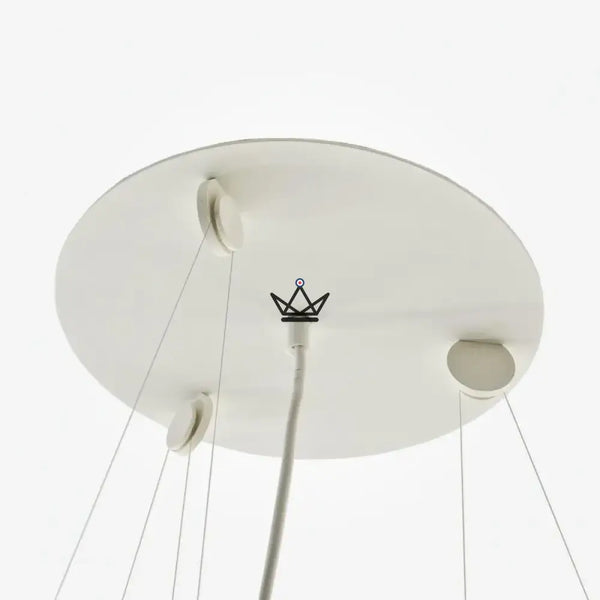
- Ceiling rose
- Mounting kit
Everything you need to know
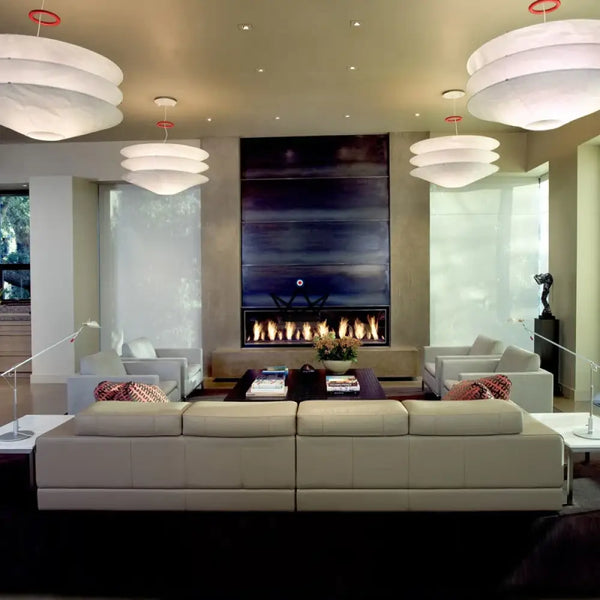
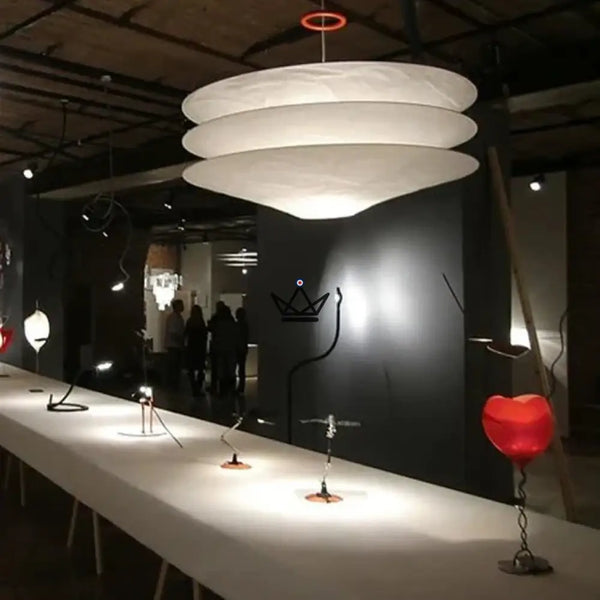
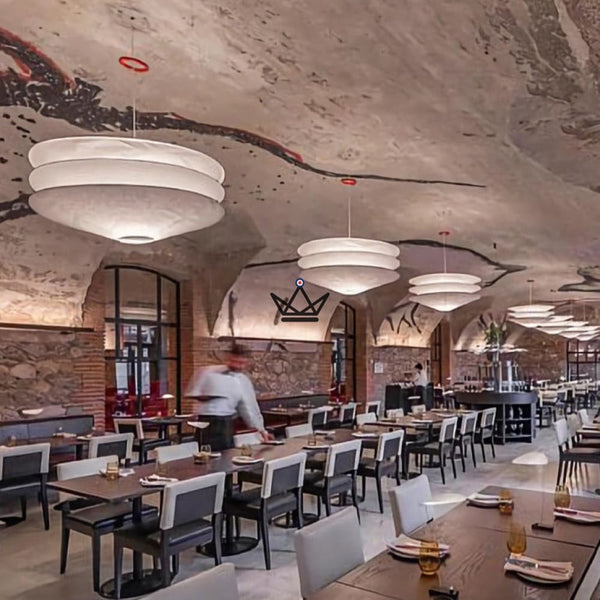
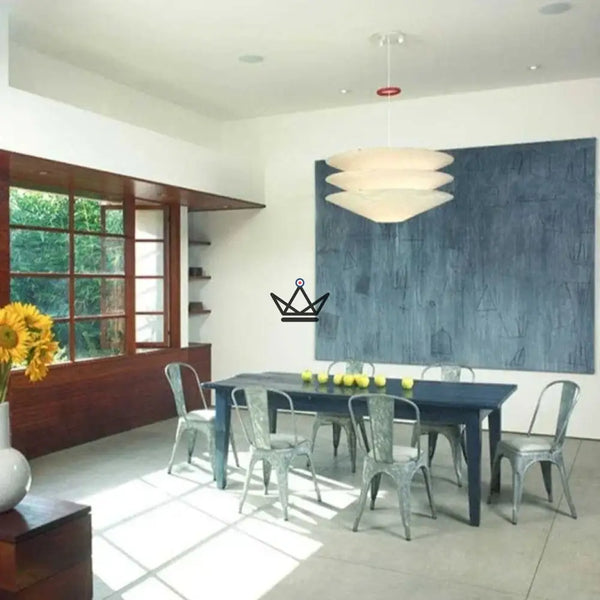
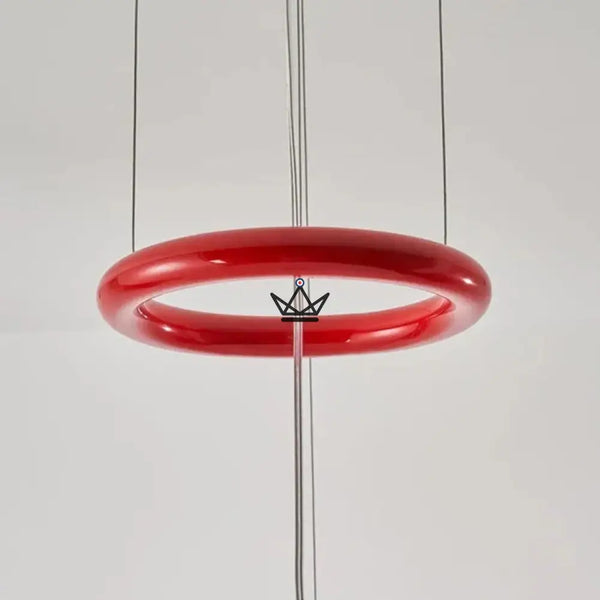
The Wind Origami is a pendant light that embodies the Japanese Wabi Sabi aesthetic in its most poetic form: three layers of Tyvek paper stacked in progressive bowls, creating an airy, wedding-cake effect that seems to float in space. The signature detail: a decorative red ring at the top of the cable, a chromatic graphic accent that contrasts with the translucent whiteness of the Tyvek. Light passes through the three layers in a progressive diffusion, casting openwork shadows of meditative softness. Available in 2 sizes (Ø 75 or Ø 100 cm) with an adjustable cable from 110 to 200 cm. E27 compatible. Free delivery. Customer rating 4.9/5.
2 sizes available
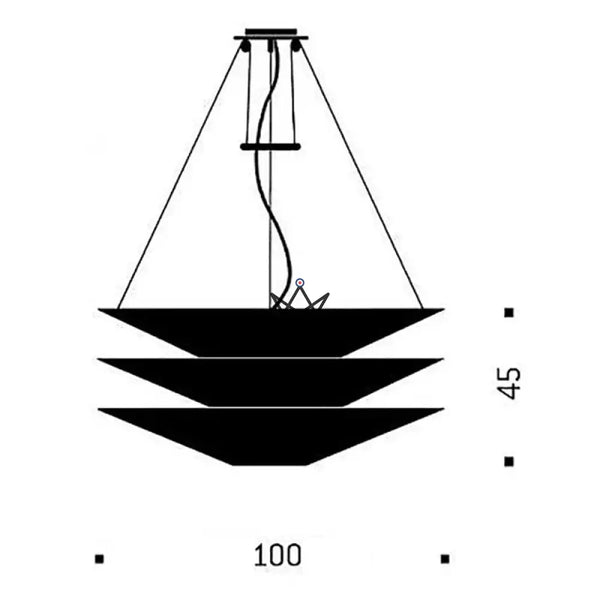
Both models share the same height of 45 cm — it is the diameter that changes. The 100 cm becomes a true architectural installation in a large room.
The art of Wabi Sabi layering
The Wind Origami borrows its aesthetic from the Japanese philosophy of Wabi Sabi — the beauty of simplicity, embraced imperfection, and frozen ephemerality. The three layers of Tyvek stacked in progressive bowls are not merely a gratuitous decorative flourish: each layer attenuates and softens the light passing through it, creating a luminous stratification where intensity diminishes progressively toward the edges. This is precisely the principle of natural light filtered through multiple layers of Japanese shoji paper. The red ring at the top is not an aesthetic whim, but a deliberate reminder of the perfect Zen circle (ensō in Japanese) that accompanies the composition to anchor the object in its cultural inspiration.
The benefit of the 110-200 cm adjustable cable
The Wind Origami cable offers rare installation flexibility: adjustable from 110 cm to 200 cm, it adapts to all residential configurations, from standard bedrooms to large architectural volumes (lofts, halls, double-height spaces). For a dining table, lower the fixture to about 70-85 cm above the tabletop. For a living room, raise it to optimize overall ambient lighting. For a stairwell or atrium, install it at full height (200 cm) for an impressive vertical architectural presence. This adjustment is done during installation, without any additional tools.
What you receive
Bulb advice. Prefer an E27 LED bulb in warm white (2700K), 600-800 lumens intensity, globe or Edison shape. Tyvek is an excellent natural diffuser — no need for high wattage; you will get a soft light passing through the 3 layers in delicate luminous stratification. Avoid 5000K bulbs or higher, which make the light cold and clinical, the opposite of the sought-after Wabi Sabi spirit. To optimize the effect of the 3-layer stratification, choose a frosted globe bulb that diffuses light at 360° rather than a directional Edison.
Wind Origami or Tense Tyvek? Both lights share the Tyvek material but their design philosophies are radically opposed. The Tense Tyvek is a single membrane stretched over steel in the shape of a flattened feather, a minimalist contemporary aesthetic. The Wind Origami is a composition with 3 stacked layers in nested bowls, a Japanese Wabi Sabi aesthetic with a signature red ring. Choose Tense for a unique, airy graphic silhouette, and Wind Origami for a meditative, layered sculptural presence. You can even combine them in a large project (Tense over the living room, Wind Origami over the table).
| Fixture type | Ceiling pendant — 3 Wabi Sabi stacked layers |
| Available dimensions | Small Ø 75 × H 45 cm / Large Ø 100 × H 45 cm |
| Structure material | Lightweight aluminum |
| Diffusion material | Tyvek paper (non-woven high-density polyethylene) — 3 layers |
| Signature details | Decorative red ring at the top of the cable — visual signature |
| Suspension cable | White, adjustable from 110 cm to 200 cm |
| Socket | Universal E27 |
| Recommended bulb | LED E27, 2700K, 600-800 lumens, frosted globe shape |
| Bulb included | Not included |
| Installation | Ceiling, rose included |
| Decorative style | Japanese Wabi Sabi, refined meditative aesthetic |
| Recommended spaces | Living rooms, dining rooms, bedrooms, halls — for large spaces prefer the 100 cm |
| Maintenance | Dry soft cloth only — avoid water and solvents |
Tyvek precautions. Tyvek paper is durable and long-lasting but sensitive to moisture and chemicals. Dry cleaning exclusively: regular dusting with a natural feather duster or a soft dry microfiber cloth is sufficient. Absolutely avoid water, cleaning sprays, and solvents, which could permanently mark the Tyvek. Handle the 3 stacked layers with care during installation and dusting — each layer is fixed individually and can be moved delicately to access adjustments.
Meditative design gift. The Wind Origami is a striking gift for lovers of Japanese, Japandi, or Wabi Sabi aesthetics. The Small (Ø 75 cm) format is suitable for classic residential interiors (living room, bedroom, compact dining room) — an accessible and refined gift. The Large (Ø 100 cm) format becomes a true architectural piece for a large living room, loft, or hall — an exceptional gift for a major renovation or real estate project inauguration. The red ring signature provides a quirky personal touch that distinguishes this fixture from other Tyvek pendants.
