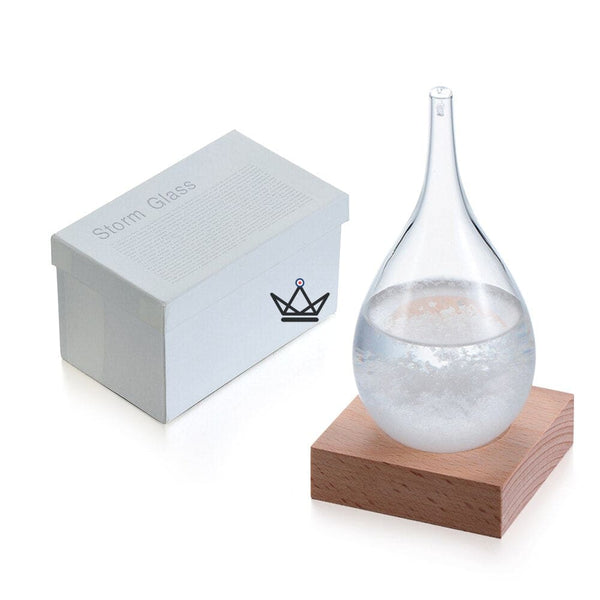
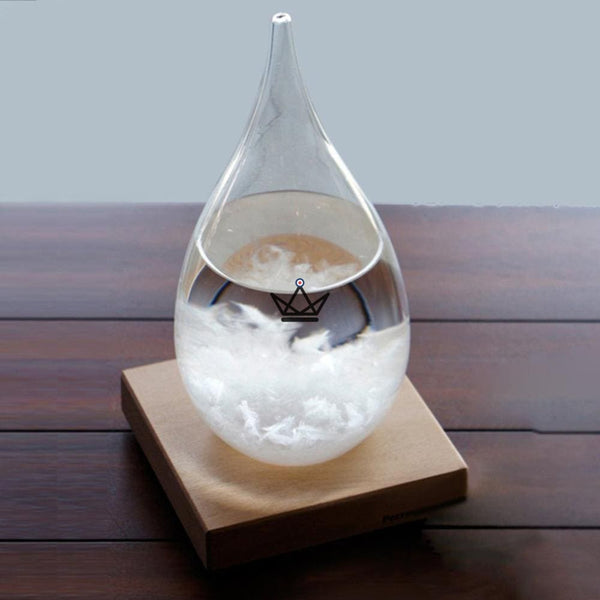
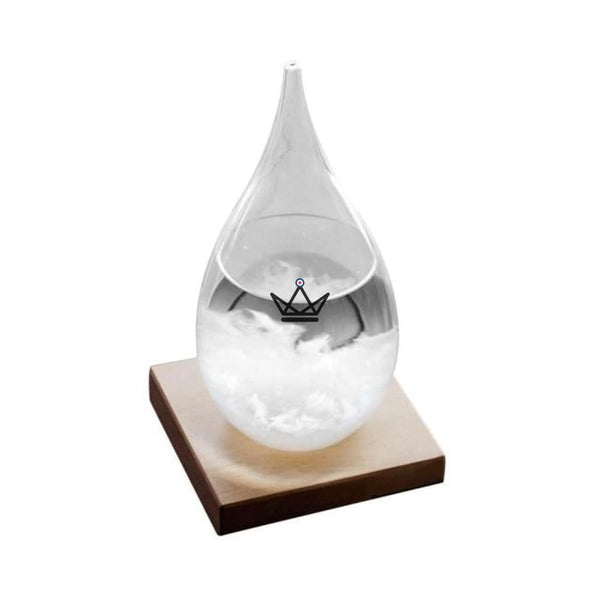
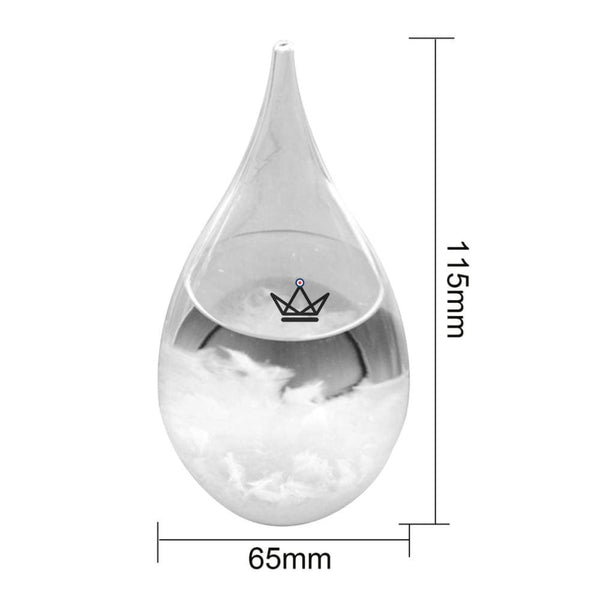
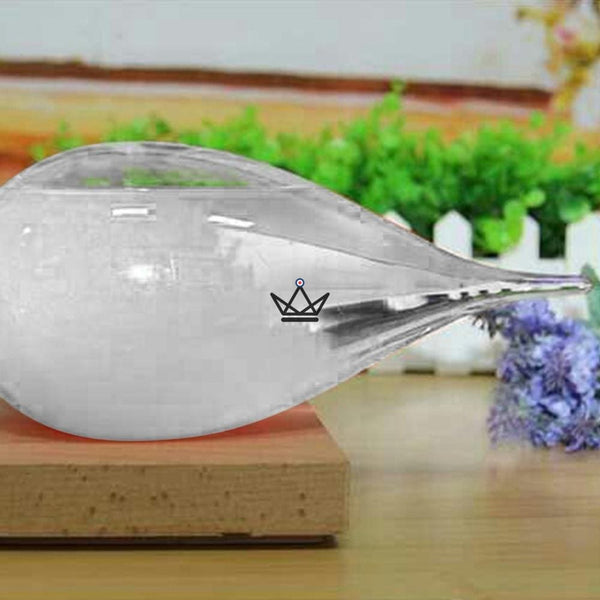
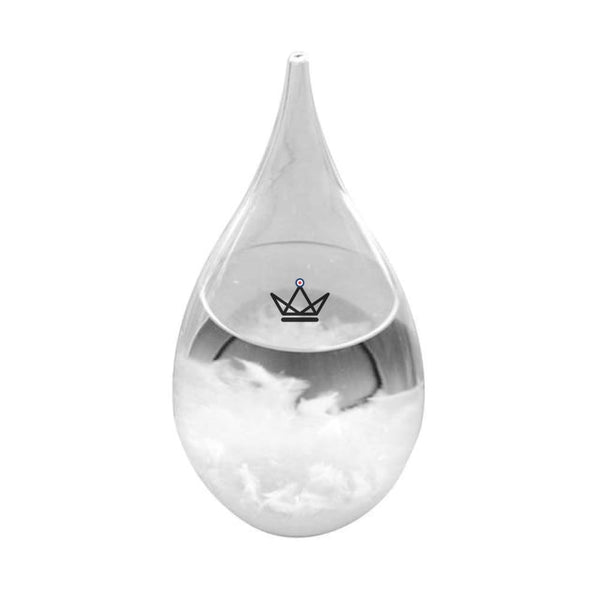
The Fitzroy barometer in glass and solid wood — invented by Admiral FitzRoy, captain of the HMS Beagle in the 19th century. Predicts weather fluctuations up to 48 hours in advance by observing atmospheric pressure variations. Dimensions: 11.5 × 6.5 cm. A functional decorative object, at the intersection of science and craftsmanship.
✦
Weather forecast up to 48hBy observing the liquid level variations in the glass tube, you can anticipate imminent weather changes up to two days in advance.
◆
Admiral FitzRoy's inventionCreated in the 19th century by Admiral Robert FitzRoy, captain of the famous British ship HMS Beagle — the same that carried Charles Darwin.
➤
Solid wood baseA warm, natural base that contrasts elegantly with the transparency of the glass — a timeless aesthetic for any interior.
✦
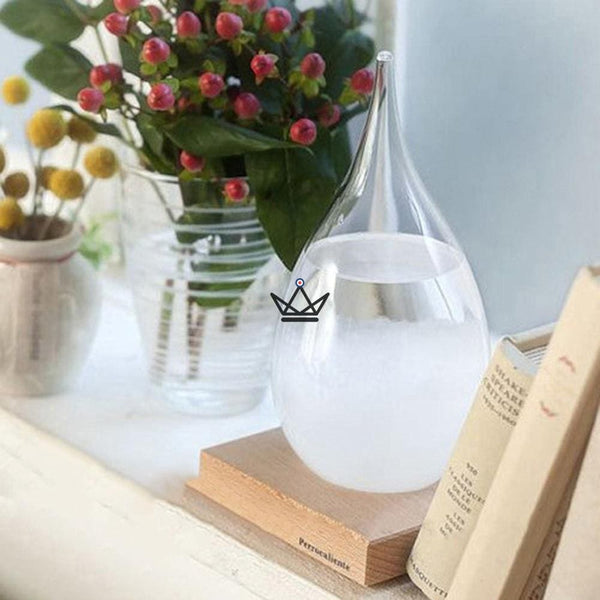
11.5 × 6.5 cm — compactSmall and discreet format — fits on a desk, shelf, or windowsill without taking up space.
◆
Functional and decorativeAn authentic scientific object as much as a decorative piece — for meteorology enthusiasts and lovers of beautiful objects.
➤
Original giftIdeal for a fan of science, navigation, vintage decor, or for enriching a desk with an object steeped in history.
The FitzRoy legacy — predicting weather without electronics
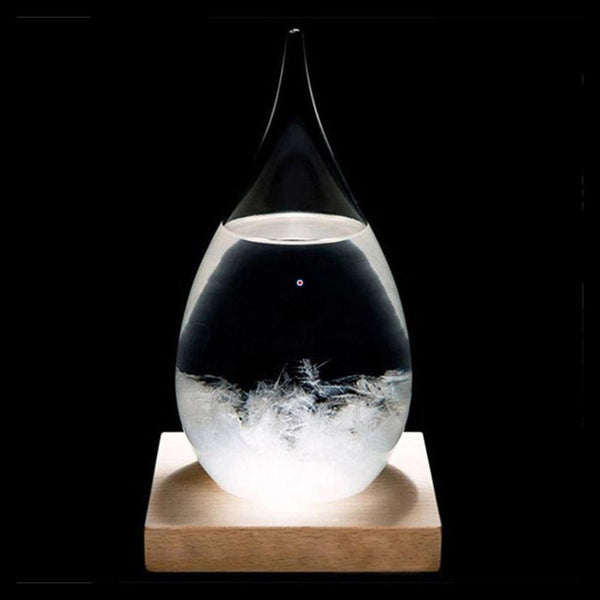
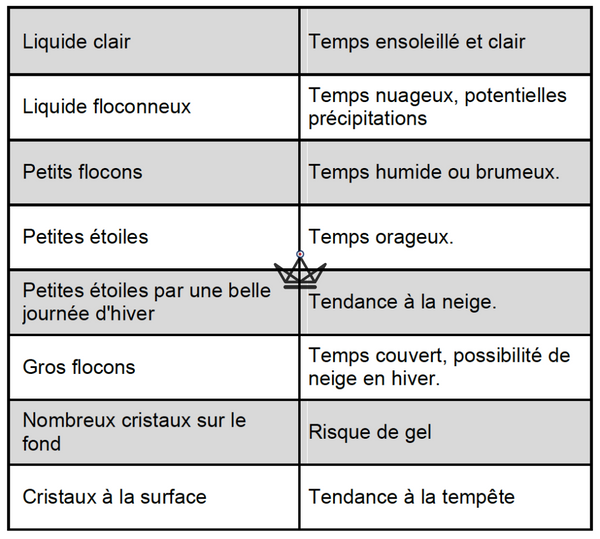
The Fitzroy barometer is based on a simple and unchanging principle: atmospheric pressure variations influence the liquid level in the glass tube. When pressure rises, the liquid descends — a sign of good weather. When pressure falls, the liquid rises in the spout — a sign of disturbances. No batteries, no screen, no connection — just physics at the service of weather forecasting since the 19th century.
| Materials |
Blown glass + solid wood |
| Dimensions |
11.5 × 6.5 cm |
| Principle |
Atmospheric pressure barometer |
| Forecast |
Up to 48 hours in advance |
| Inventor |
Admiral FitzRoy, 19th century |
| Usage |
Interior decor · office · living room · gift |
How to read a Fitzroy barometer: observe the liquid level in the spout (upper tube). Low level = high pressure = stable good weather. High level = low pressure = upcoming disturbances. The change in level over 12 to 24 hours is more indicative than the absolute position — a rapid rise signals rain, a rapid fall signals improvement.
A gift steeped in history: glass and solid wood, 11.5 × 6.5 cm, 48h weather forecast without electronics. Ideal for a science, navigation, vintage decor, or functional beautiful object enthusiast — birthday, Christmas, business gift.
Frequently asked questions
How does a Fitzroy barometer work?
The Fitzroy barometer works on the principle of atmospheric pressure: when pressure rises (good weather), the liquid descends into the upper spout. When pressure falls (upcoming disturbances), the liquid rises into the spout. It can anticipate weather changes up to 48 hours in advance.
Who invented the Fitzroy barometer?
Admiral Robert FitzRoy, captain of the HMS Beagle — the famous ship that carried Charles Darwin during his voyage to the Galápagos in the 19th century. FitzRoy was also one of the pioneers of modern meteorology and founded what would become the British Met Office.
Do I need to calibrate or fill it?
The Fitzroy barometer comes pre-filled with a colored liquid. No special maintenance is required — simply place it in a stable location, away from direct drafts and excessive heat that could distort the indications.
How meteorologically accurate is it?
The Fitzroy barometer is a weather trend indicator, not a precision instrument like a calibrated digital barometer. It is particularly reliable for detecting rapid pressure changes — and therefore imminent weather reversals — over 12 to 48 hours.