

Raw collectible minerals, natural stones sold individually or in bags — LITHOS
Tax included
In the box
- Raw mineral: 1 piece, or 50 g or 100 g bag depending on the size
Everything you need to know
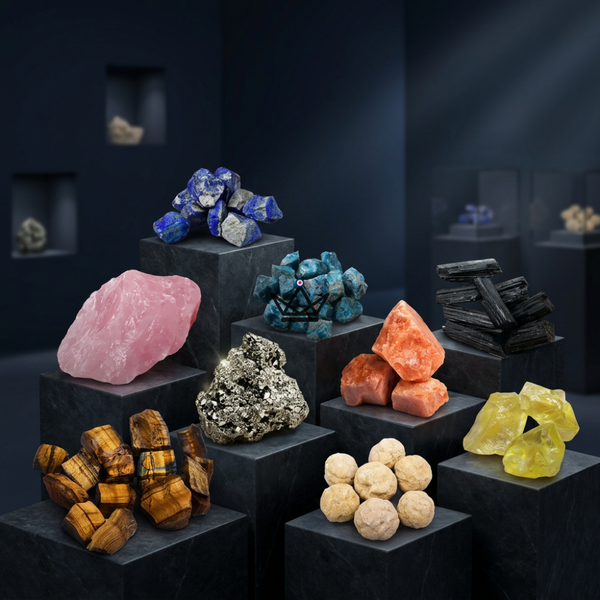
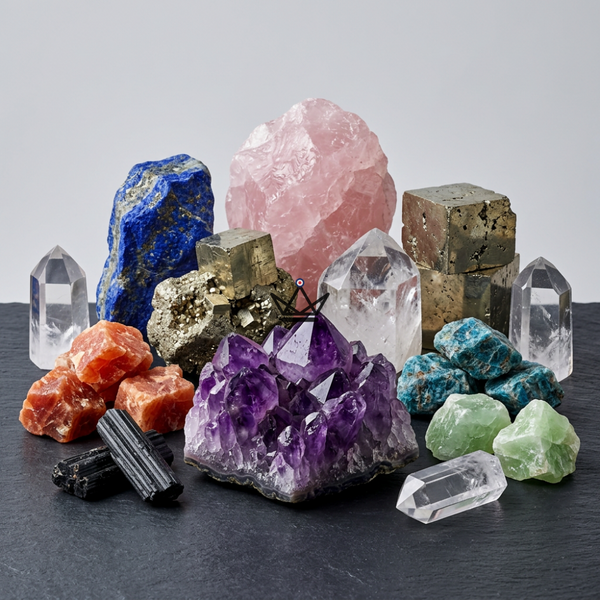
Mineralogy Raw stones Tourmaline with striated prisms, cyanite in blue blades, pyrite with a metallic sheen, calcite that doubles images, yooperlite that glows under ultraviolet light: LITHOS brings together 20 raw minerals to collect, chosen for the diversity of their colors, shapes, and geological histories. Each specimen is delivered in its natural, unpolished state, just as it comes from the rock, with its edges, crystalline faces, and irregularities. Three formats are available for each stone: a single piece to complete a collection, or a pouch of approximately 50 g or 100 g to compare several samples or fill a display case. Designed in the spirit of a cabinet of curiosities, this assortment is aimed at mineralogy enthusiasts, curious families, teachers, and decorators alike: you can learn to recognize hardness, luster, and chemical family. A collection that is built stone by stone, transforming a shelf into a small gallery of Earth sciences.
The 20 minerals and 3 formats
Reading a stone like a mineralogist
A mineral is a natural solid with a defined chemical composition, whose atoms are most often organized into a regular crystalline lattice. A rock, on the other hand, is an assembly of several minerals: lapis lazuli, yooperlite, or shungite are examples. Finally, obsidian is a natural glass: lava that cooled so quickly that its atoms did not have time to become ordered. These distinctions explain why two stones of the same color can have very different properties.
To recognize them, geologists observe color (often misleading), luster (vitreous, metallic, silky), crystalline form, cleavage, and especially hardness, measured on the Mohs scale, from 1 (talc) to 10 (diamond). In this selection, calcite (3) and apatite (5) are two of the ten reference minerals on the scale, as are quartz (7) and corundum (9): enough to perform real scratch tests at home.
Why you'll love it
The cabinet of curiosities, mineral version
In the 18th century, enlightened enthusiasts kept stones from all four corners of the globe, carefully labeled, in drawer cabinets. They observed the geometry of crystals, compared colors, and marveled at how a simple fragment of Iceland spar could double the writing placed underneath it. LITHOS revives this collector's pleasure.
Each stone is a fragment of Earth's history. Obsidian was born from a lava flow frozen in seconds; amethyst crystallized slowly in a cavity; malachite was formed by the alteration of copper deposits; cyanite testifies to the high pressures that reign at the heart of mountain ranges. Holding them in your hand is like compressing millions of years into the palm of your hand.
Arranged in a bowl, lined up on a shelf, or filed in a compartmentalized box, these raw stones compose a mineral decor that is both natural and scholarly, inviting you to ask questions and seek answers.
Build your collection in 4 steps
Mineralogical landmarks: the 20 stones at a glance
| Mineral | Nature | Hardness (Mohs) | To observe |
|---|---|---|---|
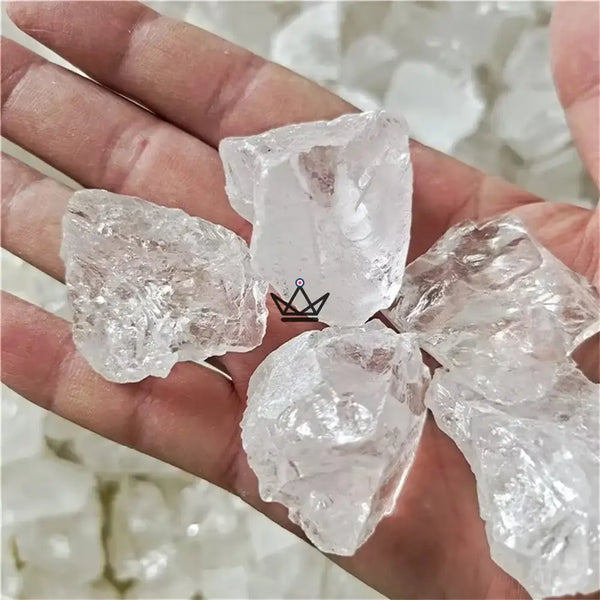
| Rock crystal | Colorless quartz | 7 | Six-sided prisms, transparency |
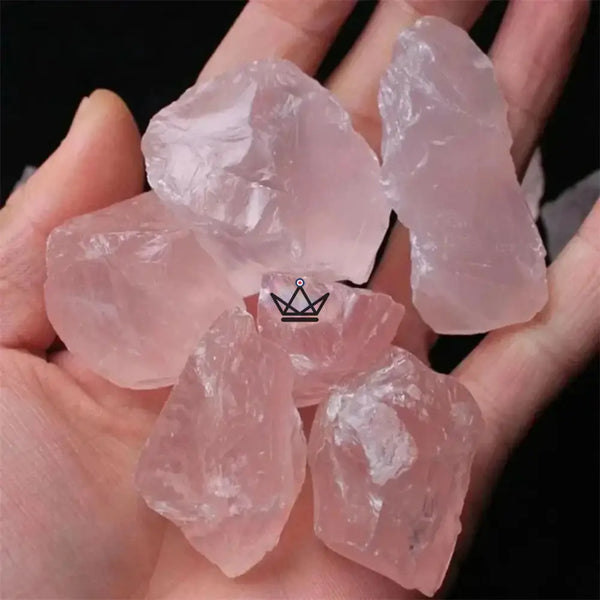
| Rose quartz | Quartz | 7 | Milky pink hue |
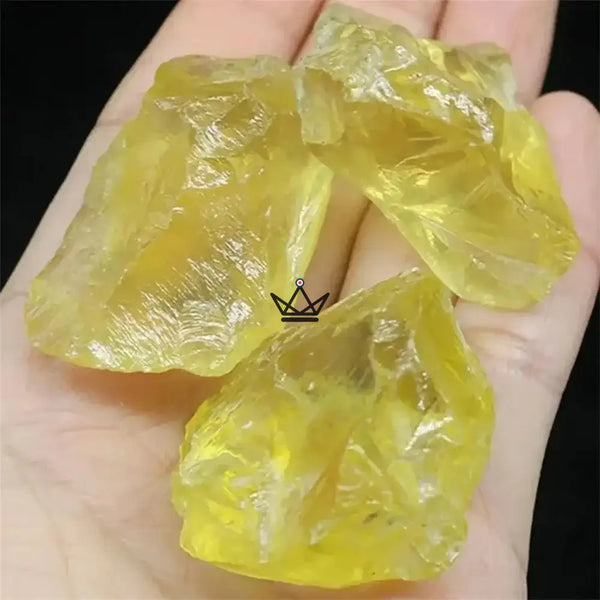
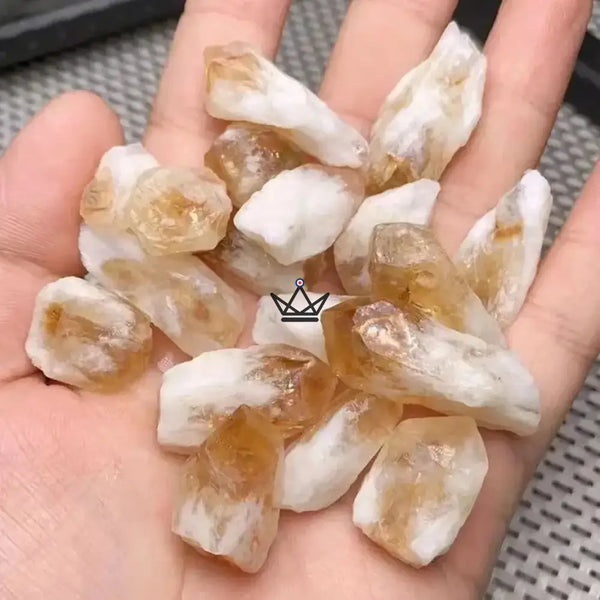
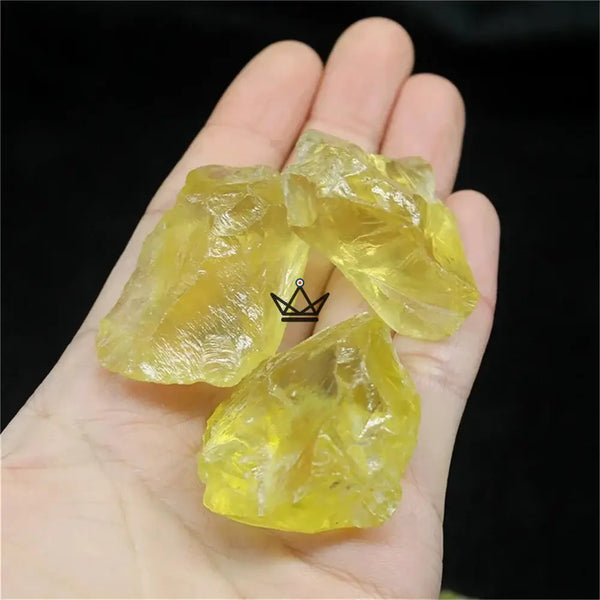
| Yellow quartz | Quartz | 7 | Pale yellow to white points |
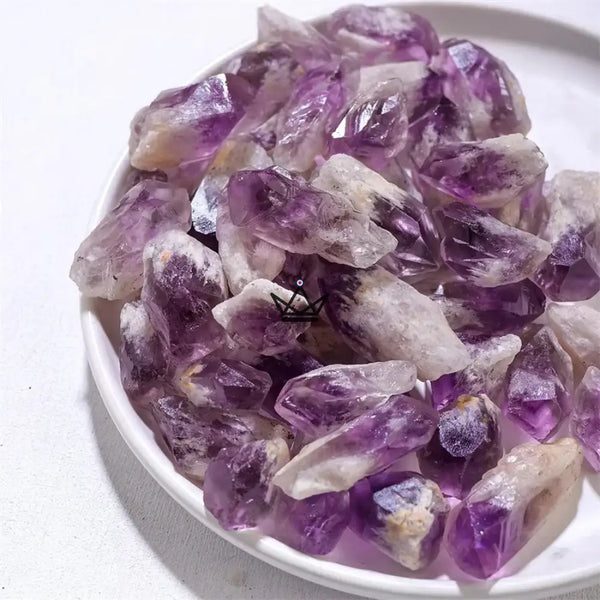
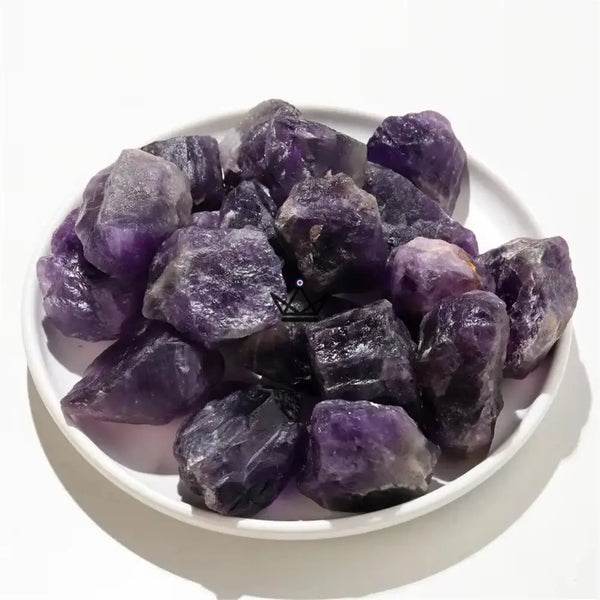
| Raw amethyst · Amethyst points | Violet quartz | 7 | Violet color, crystalline points |
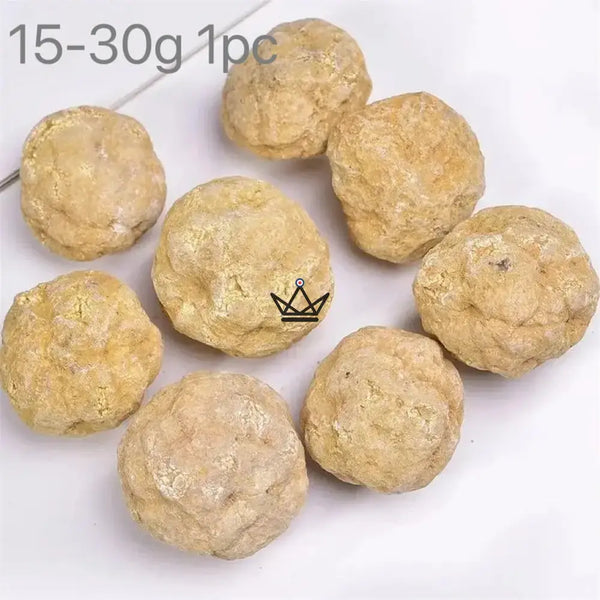
| Agate geode | Chalcedony (microcrystalline quartz) | 6.5 to 7 | Closed shell, formed in a cavity |
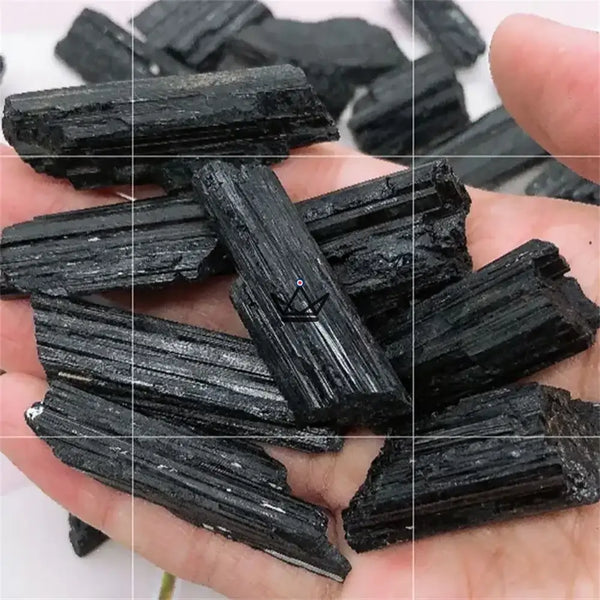
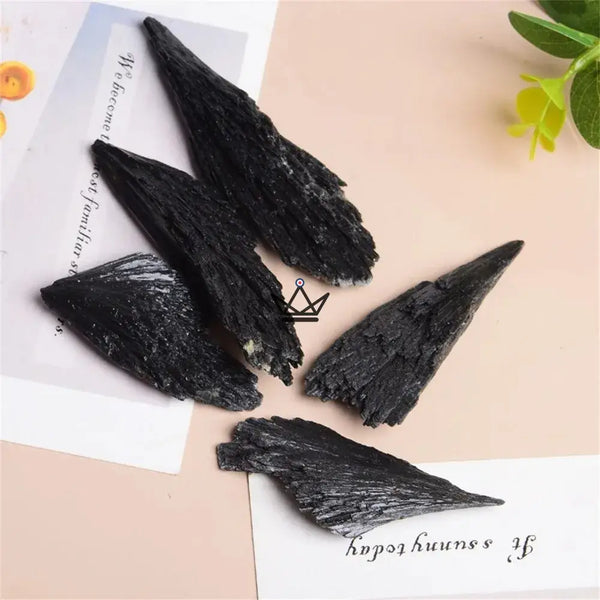
| Black tourmaline · Black tourmaline blades | Silicate (borosilicate) | 7 to 7.5 | Striated prisms along the length |
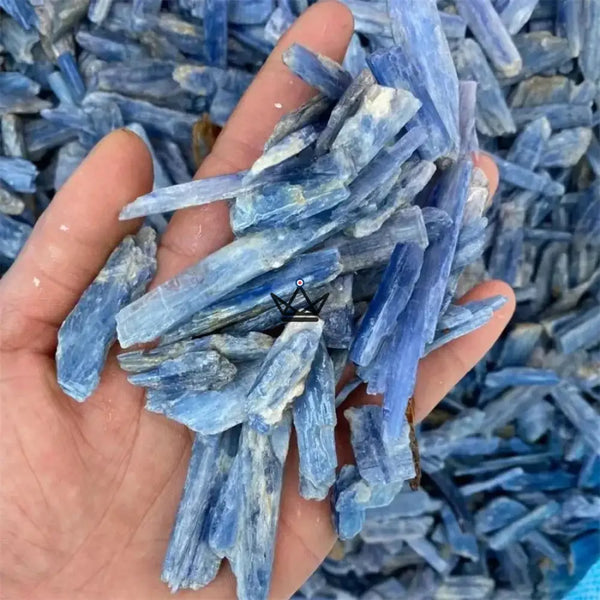
| Blue cyanite | Aluminum silicate | 4.5 to 7 depending on direction | Blue blades, variable hardness |
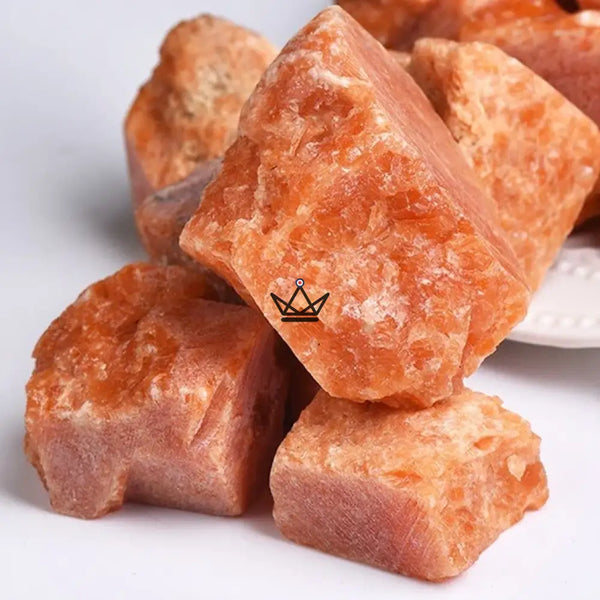
| Sunstone | Feldspar | 6 to 6.5 | Sparkling reflections |
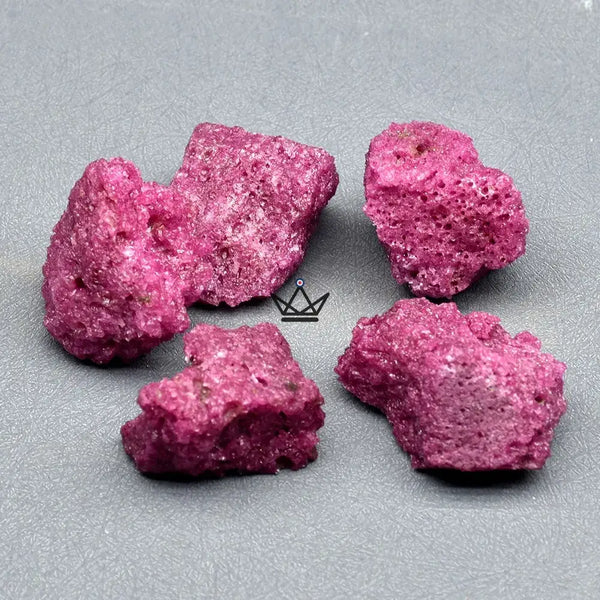
| Red corundum | Aluminum oxide | 9 | Pink-red hue, great hardness |
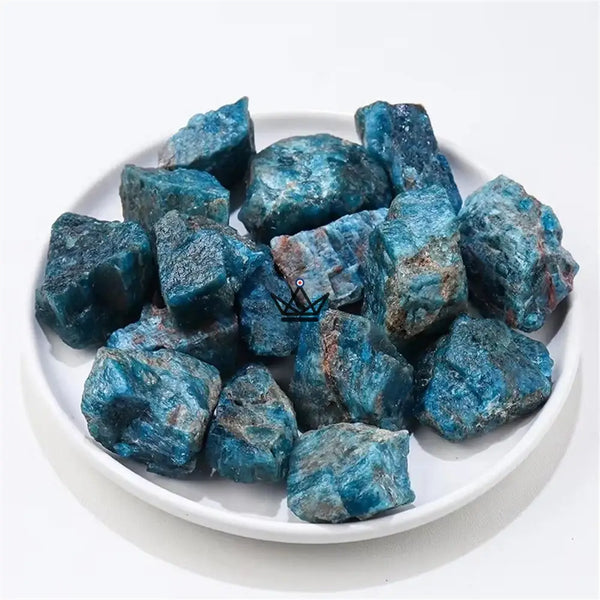
| Blue apatite | Calcium phosphate | 5 | Reference mineral for Mohs |
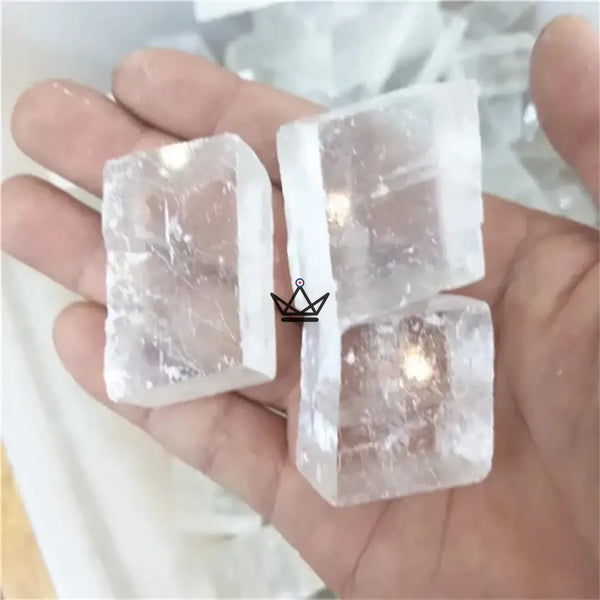
| Optical calcite | Calcium carbonate | 3 | Double refraction |
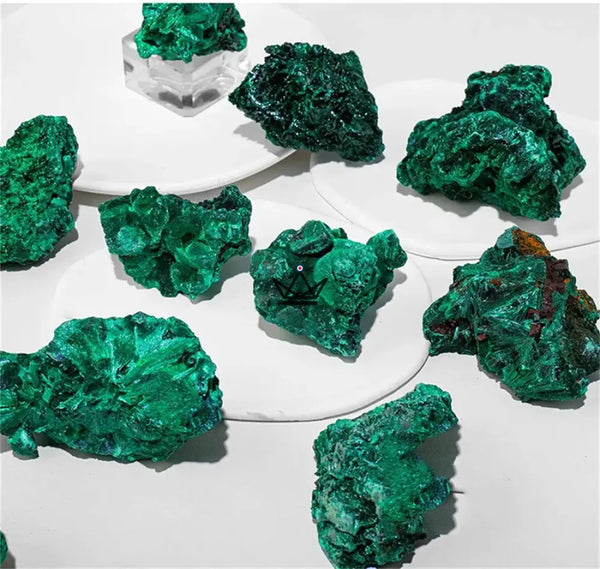
| Malachite | Copper carbonate | 3.5 to 4 | Intense green, concentric bands |
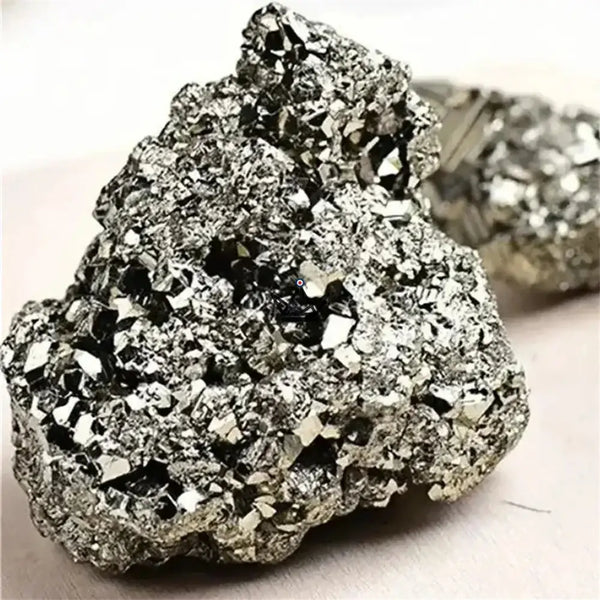
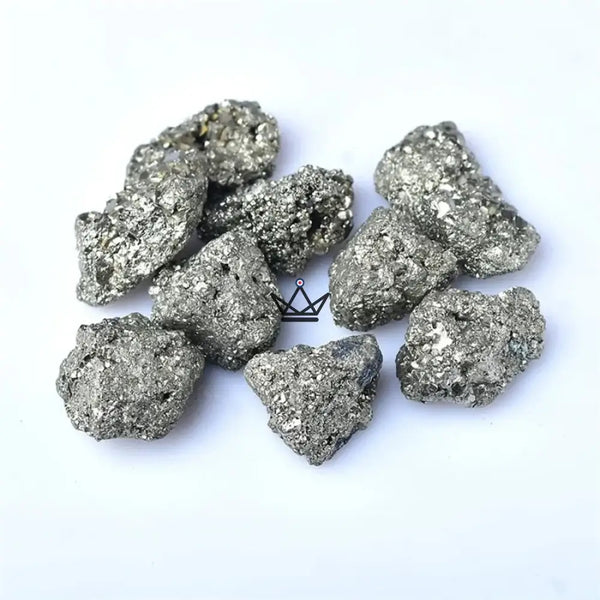
| Pyrite | Iron sulfide | 6 to 6.5 | Golden metallic luster, cubic faces |
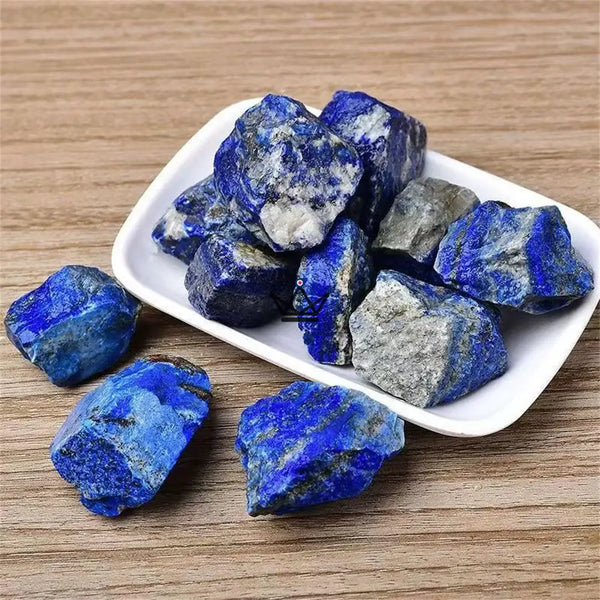
| Lapis lazuli | Rock (lazurite, calcite, pyrite) | 5 to 5.5 | Deep blue, golden flecks |
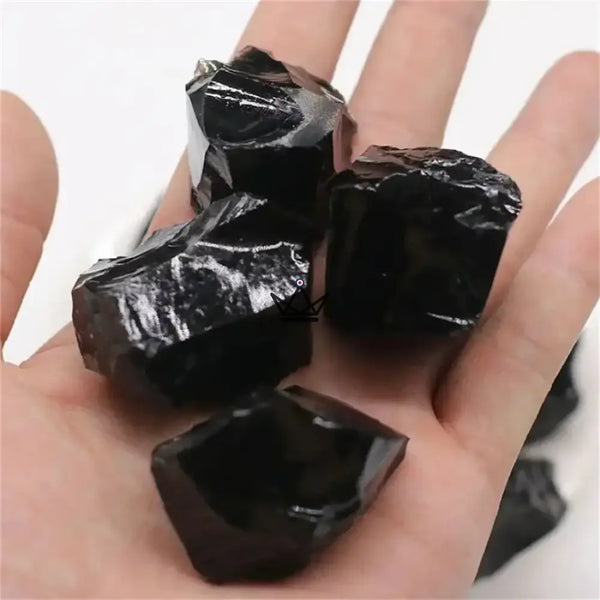
| Obsidian | Volcanic glass | 5 to 5.5 | Conchoidal fracture, vitreous luster |
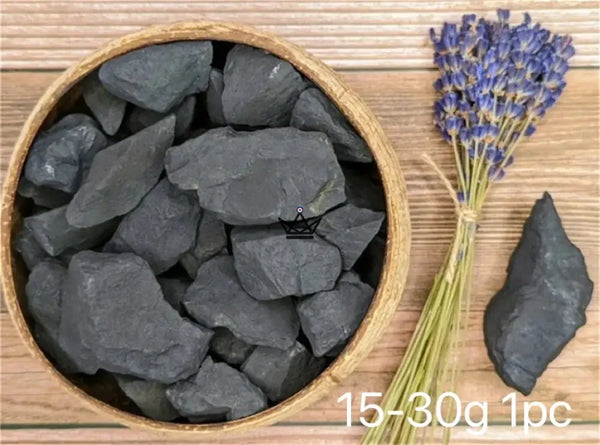
| Shungite | Black rock rich in carbon | Variable | Matte black to semi-glossy appearance |
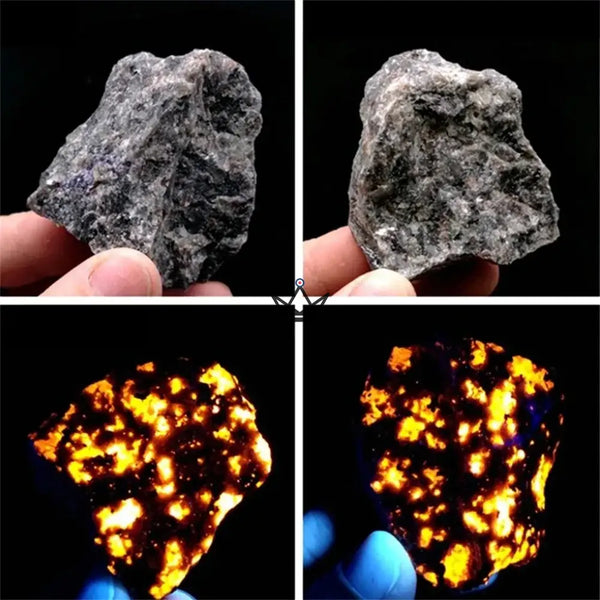
| Yooperlite (UV fluorescent) | Sodalite syenite | Approximately 5.5 to 6 | Bright orange dots under UV |
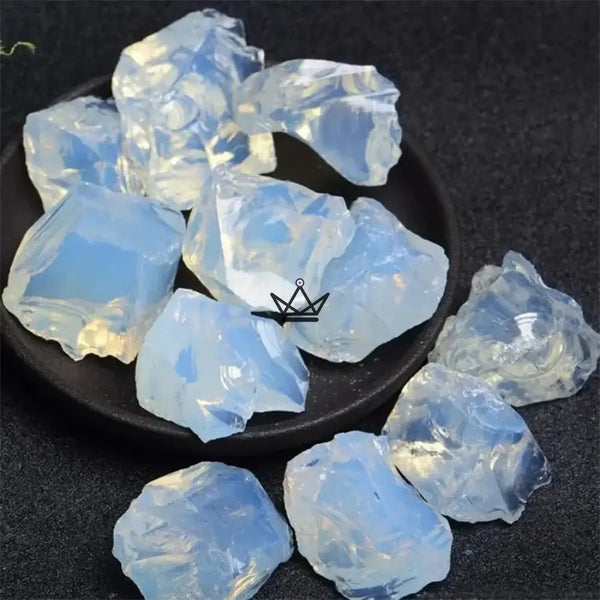
| Opalite | Opalescent glass (synthetic) | Approximately 5.5 | Bluish or orange reflections |
Good to know: these stones are raw natural specimens: each piece is unique and its shape, size, shade, and appearance may differ from the photos. The 50 g and 100 g pouches are approximate weights (about 45-55 g and 95-105 g) and contain several fragments of varying sizes. Opalite is not a natural mineral but an opalescent glass manufactured by humans: we indicate this with full transparency. These stones are offered as objects for collection, decoration, and discovery of Earth sciences.
Tip: to reveal the fluorescence of the yooperlite, shine a long-wave UV lamp (365 nm, not included) on it in the dark. For optical calcite, place it over a line of text: the writing will appear doubled. And for a fun hardness test, try to scratch a window: quartz will, calcite will not. Then store the stones in a compartmentalized box so they do not scratch each other.
Technical specifications
| Product type | Raw mineral collection |
| Model name | LITHOS |
| Minerals offered | 20 (see module above) |
| Formats | 1 piece · 50 g pouch · 100 g pouch |
| Pouch weights | Approximately 45-55 g or 95-105 g |
| Size of one piece | Not provided (varies by specimen) |
| Finish | Raw, unpolished |
| Material | Natural stone; opalite = synthetic glass |
| Appearance | Shape, shade, and size specific to each piece |
| Usage | Collection, decoration, education |
| Maintenance | Dust with a soft brush or dry cloth |
| Theme | The Lab, minerals and chemistry |
Precautions: these stones are not edible and must be kept out of reach of young children (small parts, risk of ingestion). Malachite (copper carbonate) and pyrite (iron sulfide) can release dust: do not sand them, do not put them in your mouth, and wash your hands after handling. Obsidian can have sharp edges. Some stones are fragile: optical calcite is soft and scratches easily; kyanite cleaves into blades. Avoid soaking them in water.
A gift idea for curious minds
A bag of amethyst for a birthday, a pyrite and an optical calcite for a science-loving child, an assortment of five or six minerals for a geology enthusiast: LITHOS is suitable for every desire and every budget. It also makes a lovely end-of-year gift for a Life and Earth Sciences teacher.
To create a more complete set, pair a few stones with other finds from our minerals and chemistry collection, or explore all of our scientific objects from the Lab. And for lovers of beautiful materials, our selection of decorative objects offers other pieces to display alongside them.
Frequently Asked Questions
Are the stones natural?
Yes, for 19 of the 20 materials offered: tourmalines, quartz, amethysts, corundum, apatite, lapis lazuli, agate, obsidian, sunstone, malachite, optical calcite, pyrite, kyanite, shungite, and yooperlite are raw natural stones, not polished. The only exception is opalite: despite its name, it is a man-made opalescent glass, appreciated for its bluish reflections against a dark background and orange ones when backlit. We prefer to state this clearly, as many sellers present it as a stone. It remains interesting in an educational collection, precisely for learning how to distinguish a natural mineral from a synthetic material.
What is the difference between 1 piece, 50g bag, and 100g bag?
The 1 piece format corresponds to a single raw specimen, ideal for completing a collection or testing a mineral. The 50g bag and 100g bag formats contain several fragments of the same mineral, for a total weight of approximately 45 to 55g or 95 to 105g. The number of stones in a bag depends on their size, which varies from one harvest to another: it is therefore not fixed. Bags are well-suited for comparing several samples, putting together a decorative dish, sharing stones between children during a workshop, or filling a display case.
What is the size of a stone sold individually?
The exact size of an individual specimen is not provided by our supplier and varies from one mineral to another: an amethyst point, a small agate geode, and a kyanite blade obviously do not have the same size. These are raw natural stones, each unique in its shape, shade, and dimensions. The photos give an idea of the general appearance, but the piece received may differ slightly. If you are looking for a specific size for a decoration project or display case, do not hesitate to ask our customer service team before placing your order: we will let you know what we can verify.
What is the Mohs scale?
The Mohs scale, proposed in 1812 by mineralogist Friedrich Mohs, classifies minerals according to their resistance to scratching, from 1 (talc) to 10 (diamond). A mineral scratches all those that have a hardness lower than its own. It is a relative and non-proportional scale: the gap between corundum (9) and diamond (10) is much larger than between talc (1) and gypsum (2). Several LITHOS stones are among the ten reference minerals: calcite (3), apatite (5), quartz (7), and corundum (9). You can therefore perform simple scratch tests at home.
Why does optical calcite double images?
Optical calcite, also called Iceland spar, is a very transparent calcite that exhibits strong birefringence: a light ray passing through it is split into two rays that do not propagate at the same speed and do not follow the same path. The result: a line of text placed under the crystal appears doubled. If you rotate the stone, one of the two images rotates around the other. This phenomenon, described as early as the 17th century, played an important role in understanding the nature of light. It is one of the most spectacular experiments to perform with this collection.
Is the UV lamp for the yooperlite provided?
No, no UV lamp is included. Yooperlite is a grey rock with a discreet appearance in daylight; under a long-wave (365 nm) ultraviolet lamp, the sodalite grains it contains become fluorescent and form bright yellow-orange spots and veins. The effect is more intense in a dark room. A small 365 nm UV flashlight is generally sufficient. Never look directly at the UV source and do not point it toward eyes. For a larger lot, a dedicated listing for yooperlite also exists in our Lab universe.
How do I maintain and store these minerals?
A simple soft brush or dry cloth is enough to dust them off. Avoid soaking them: some stones like malachite, calcite, or pyrite do not tolerate water, household products, or prolonged humidity well, and pyrite can tarnish in humid air. Store soft stones (calcite, malachite) separately from hard stones (quartz, corundum, tourmaline) to avoid scratches. A compartmented box, with a small label for each mineral, remains the ideal solution. After handling malachite or pyrite, remember to wash your hands.
